Third Act Review crest Third Act Review Structure · pacing · plot

A quarterly of long-form criticism about how story-driven games are built, and about the point in the second half where a plot either holds or stops holding.

Issue essay

The Sagging Middle Is A Budget Decision Wearing A Narrative Costume

Almost every long game loses its grip somewhere around the two-thirds mark. The usual explanation is that second acts are hard to write. The more useful explanation is that second acts are where content produced to fill a runtime goes, and that filling a runtime and telling a story are different jobs given to the same hours.

Essay Approx. 4,400 words Eight games examined
Read the essay All articles
An empty theatre seen from the stalls with heavy red curtains half drawn and a single work light standing centre stage
A cluttered study with papers pinned to a board and a chair pushed back, lit by a single warm lamp
Article

Revelation Timing: Why The Twist Usually Arrives Twenty Minutes Late

A revelation has to land while the player still has the energy to reconsider what it means. In six of the eight games examined for this piece, the central turn arrived after the point at which the player had already committed to an interpretation, which converts a twist into an inconvenience. The fix is scheduling rather than writing.

In this issue

Full contents
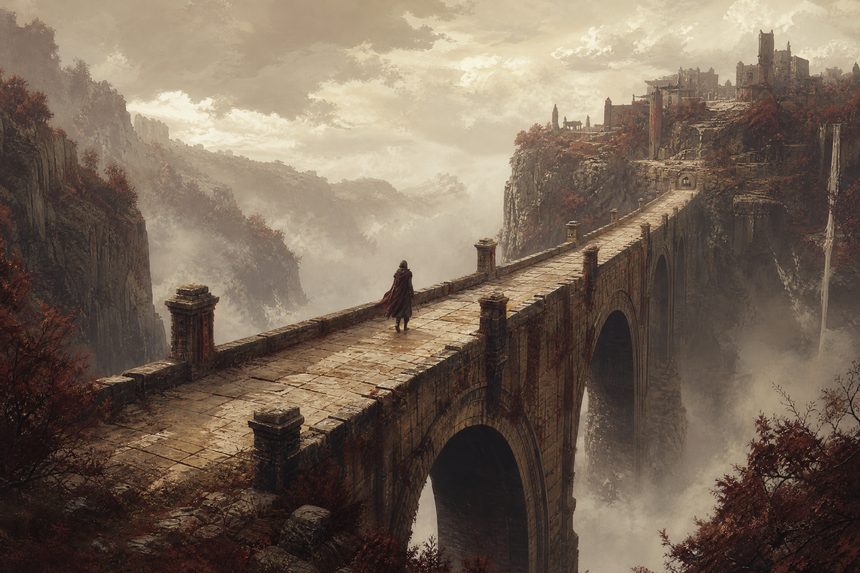
A traveller crossing a long stone bridge over a misty gorge, halfway across, in overcast light
Essay

The Sagging Middle Is A Budget Decision Wearing A Narrative Costume

Second acts are where runtime-filling content lives, and runtime-filling content has different requirements from storytelling. An argument that the familiar mid-game slump is a scheduling artefact rather than a writing failure, supported by what happens to mission density in eight games.

A study with papers pinned to a board and a chair pushed back
Article

Revelation Timing: Why The Twist Usually Arrives Twenty Minutes Late

The turn has to come while the player can still afford to rethink. Six of eight games place it after commitment has hardened, which makes a revelation feel like a correction rather than a door opening. On why this keeps happening and what a well-placed turn looks like in practice.

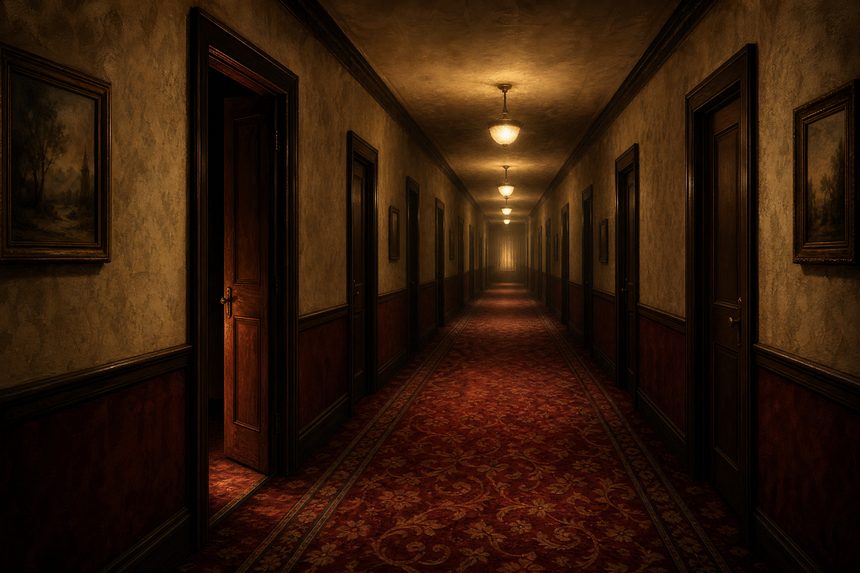
A long hotel corridor with patterned carpet and closed doors receding into dim warm light
Article

Corridor Pacing: The Quiet Stretch Before A Scare Is The Whole Trick

Horror games are usually discussed in terms of what happens. This piece measures the intervals between events across five games and finds that the successful ones are distinguished almost entirely by the length and shape of the quiet, not by the quality of the interruption.

A large table covered with a hand-drawn map, wooden markers arranged in clusters and a brass compass, lit by a low lamp
Note

Campaign Games Have Three Acts And Four Chapters Too Many

Strategy campaigns inherit their structure from the tutorial requirement, which produces a first third that teaches, a second third that repeats and a final third that has nothing left to introduce. A short note on the two campaigns that solved this by teaching later.

Short notes

Full contents
Note

The Collapse Chapter, And Why It Always Works

A late chapter in which a familiar space is wrecked costs almost nothing and lands almost always. On why the technique is reliable, and the one game where it did not work.